Current and past research

Accretion onto Ultraluminous X-ray Pulsars

Published:

Ultraluminous X-ray pulsars (ULXPs) are a rare and intriguing class of accreting neutron stars capable of sustaining super-Eddington luminosities. Among them, Swift J0243.6+6124 stands out as the only confirmed Galactic ULXP, making it an ideal target for studying emission variability across changing accretion regimes. As part of my master's thesis, we conduct a detailed spectro-temporal analysis of this source during its 2023 normal outburst, using observations from the NICER mission in the 0.7–10 keV range, supplemented by INSIGHT-HXMT for higher energy coverage (upto 250 keV).

These insights aim to further our understanding of emission geometry and accretion dynamics in highly magnetized neutron stars operating in extreme luminosity regimes. The mystery of extreme luminosity obtained by accretion onto neutron star remains an open research question with physics of super-eddington accretion brought into question due to the kind of compact objects acting as central engine.
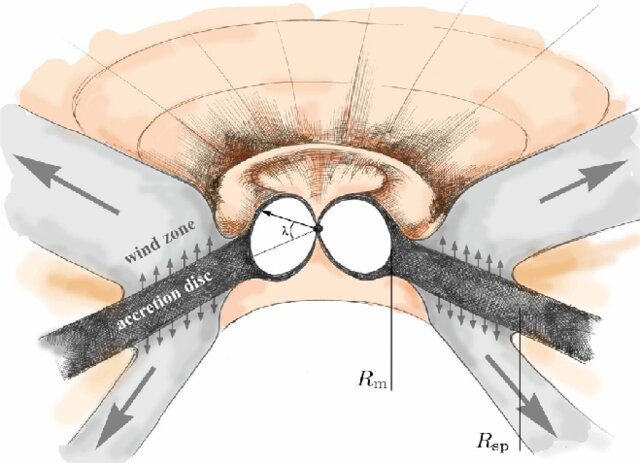
*Figure: Schematic of super-Eddington accretion onto a ULXP(Mushtukov et al. 2017, 2019)*
Statistical validation of TESS exoplanet candidates

Published:

The VaTEST project focuses on the statistical validation of exoplanet candidates discovered by NASA’s TESS mission. Initiated in May 2022, the project employs probabilistic frameworks and diagnostic tools to distinguish true planetary signals from astrophysical false positives. Combining photometric and spectroscopic data analysis with Python-based validation pipelines, VaTEST aims to robustly confirm exoplanets—especially those lacking radial velocity follow-up—by computing false positive probabilities and planet likelihoods. The ongoing effort is expanding toward the bulk validation of unconfirmed candidates to accelerate population-level studies of exoplanets.

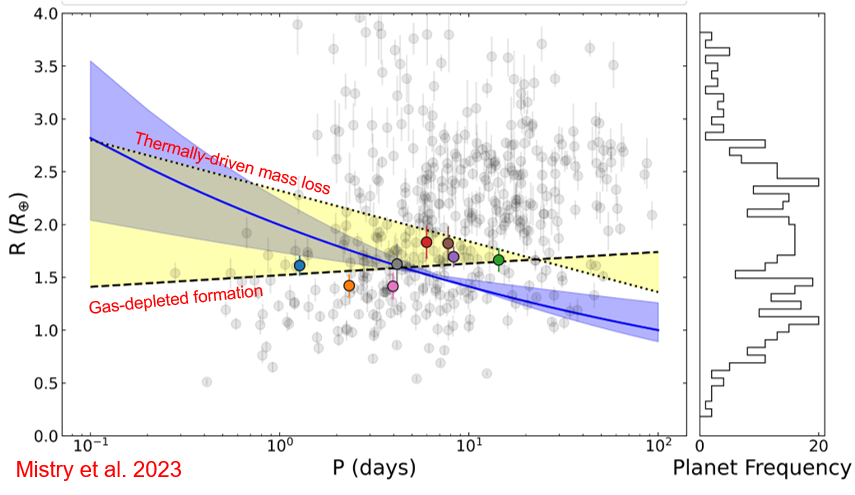
plot taken from Vatest 3 where we manage to validate several keystone exoplanets

Statistical study of super-Mercuries

Published:

Also worked as an intern with Dr. Verdan Adibekyan and his group in Instituto de Astrofísica e Ciências do Espaço (IA) on testing the hypothesis that super-Mercuries form a distinct population compared to super-Earths and thereby have different formation channels.

Deep learning for Gravitational Wave event localization

Published:

I got a chance to test my deep learning lessons through a summer internship with Dr. Linqing Wen’s group at University of Western Australia being part of Ozgrav team. I collaborated with Dr. Chayyan Chaterjee, then doctoral candidate of Dr. Linqing working on training a mixture density model using tensoflow with a probablistic layer to predict the sky localizations of merger events. The work was adjudged the people’s choice winner of the 3-Mintue-thesis styel competition held at UWA for all summer interns.

Drift Mode identification in multi-band uGMRT observation of PSR J0034-0721

Published:

Worked on the single-pulse analysis of radio pulsars under Dr Manoneeta Chakraborty funded by Indian Academy of Science summer research fellowship. We aimed to identify the different drift modes exhibited by this pulsar during previous studies with GMRT and MWA. The frequency dependance of the drifting is essential to understand the emission of the radio pulsars. The work was very helpful as a stepping stone in the field of astronomy gaining in-hand experience with radio pulsar analysis.